
Artificial intelligence is no longer optional. 78% of German enterprises already use AI in at least one business area. But how it’s deployed determines whether it becomes a strategic advantage or a compliance liability.
Most organizations reach for cloud solutions: Microsoft Copilot, Google Gemini, OpenAI Enterprise. Quick to deploy, easy to use. But your data leaves your organization. The US CLOUD Act gives US authorities potential access — even if servers are located in Frankfurt.
What does sovereign AI mean?
Sovereign AI means full control over data, models, and infrastructure. Not a single byte leaves your network. No dependency on cloud vendors. No data processing agreements with AI services required.
45% of EuroCloud members cite data sovereignty as the top trend for 2026. Not performance, not features — sovereignty.
Why now?
Three developments make sovereign AI mandatory in 2026:
1. EU AI Act: Starting 2026, fines of up to EUR 35 million or 7% of annual revenue apply. Organizations need full control over their AI systems — model selection, training, auditing. With cloud AI, that control belongs to the vendor.
2. Shadow AI is exploding: 75% of enterprise AI usage is uncontrolled. Employees use ChatGPT with company data — without approval, without compliance checks. This is not just a security risk, but also a labor law issue: works councils have co-determination rights under German law.
3. Costs are escalating: Microsoft Copilot costs EUR 30 per user per month. For 500 users over 5 years, that exceeds EUR 700,000 — before implementation, support, and training. Token limits and API costs often add up on top.
How does sovereign AI work in practice?
Take contboxx Vault as an example: The platform ships as a turnkey appliance — NVIDIA hardware, pre-installed AI models, 40+ integrations. Live in 6 weeks.
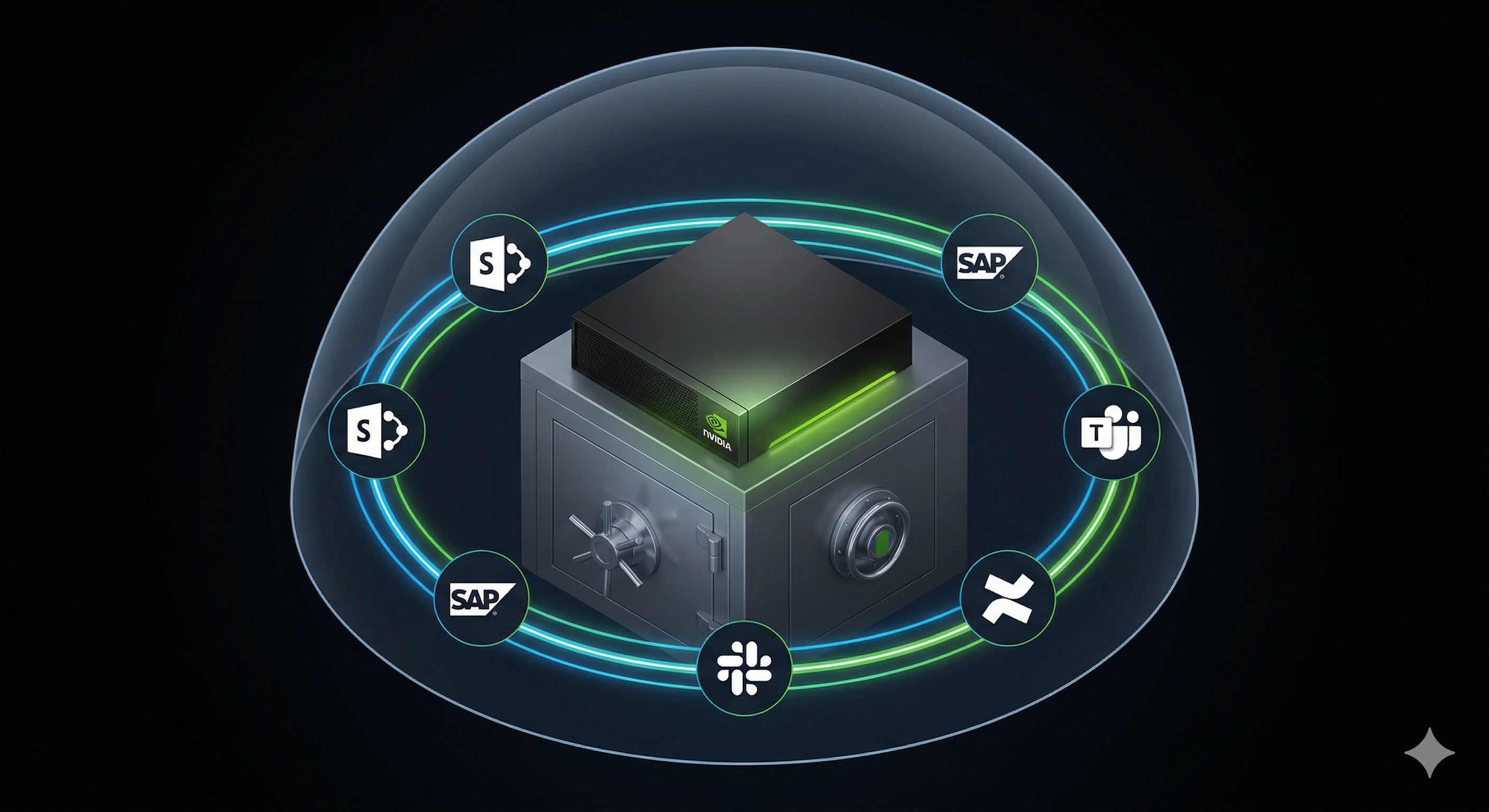
The workflow:
Step 1 — Connect: Vault integrates with SharePoint, Confluence, SAP, Slack, Teams, and 40+ more systems.
Step 2 — Process: AI tags, classifies, translates (119+ languages), summarizes, and checks compliance.
Step 3 — Distribute: Content is automatically delivered via digital signage, Slack/Teams, email, and newsletters.
Everything runs on your own infrastructure. No cloud vendor sees your data.
What are the concrete benefits?
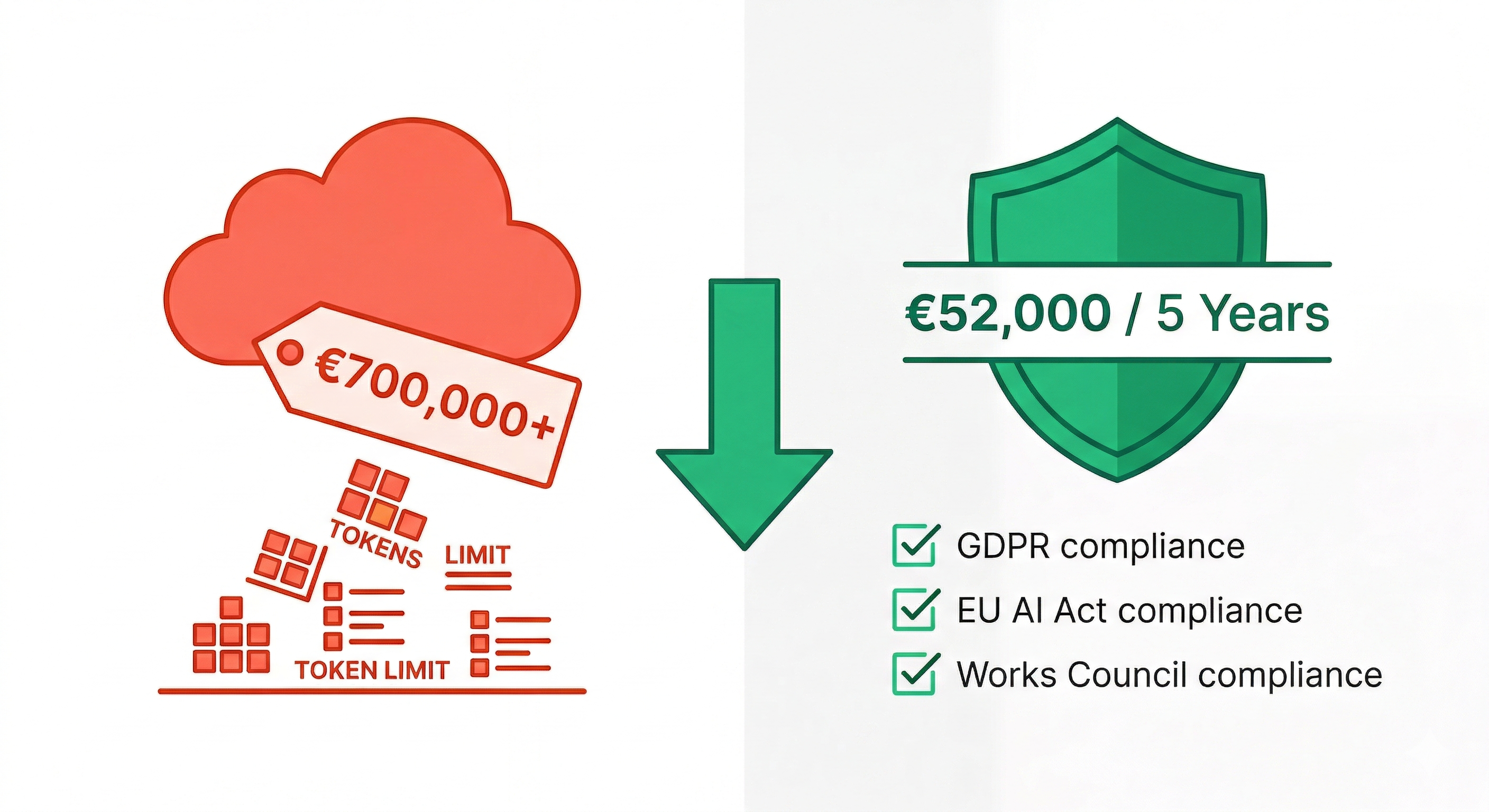
The numbers speak for themselves:
- Up to 96% cheaper than cloud AI search alternatives
- No per-user license. No token limits.
- 5-year TCO from approximately EUR 52,000 — compare that to the alternatives
- 1,700 hours per year saved on manual document maintenance
- EUR 150,000 per year saved on translation costs
- 90% less effort for internal newsletters
Conclusion
Sovereign AI is no longer a luxury — it is the prerequisite for any AI strategy that needs to satisfy the EU AI Act, GDPR, and works councils simultaneously. And it doesn’t have to be expensive or complicated.